Welcome back to the Sunstone Way.
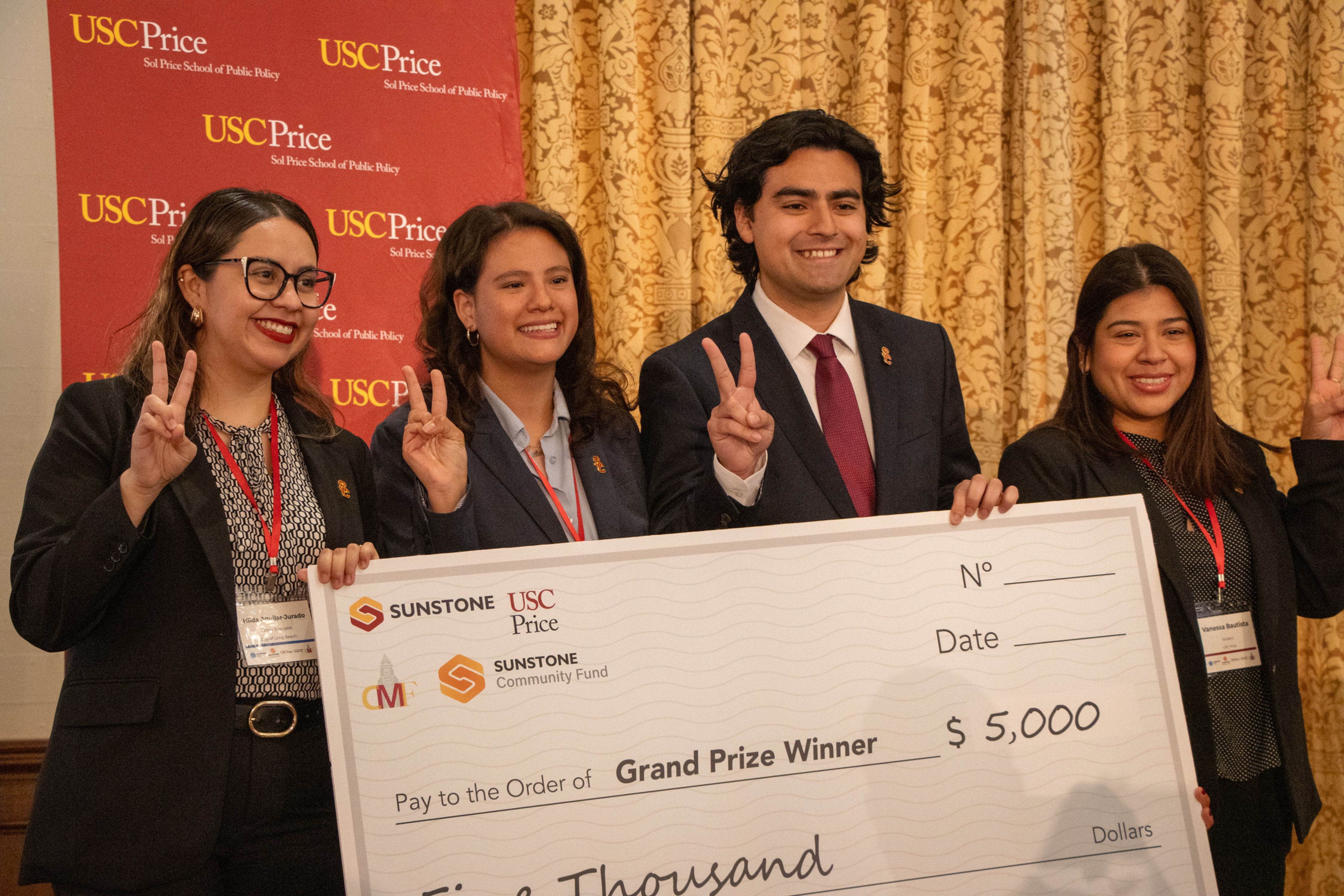
Tomorrow – Friday, Aug. 14 – we are hosting a Zoom information session for city officials interested in becoming a client city for the Sunstone Economic Development Challenge @ USC Price. There is still time to register here.
I mentioned the session last week. This week I want to explain why I think that conversation matters more this year than it has in the four years before it.
Something is shifting in how Americans start businesses. If you work in economic development, it may be shifting right under your feet. We’re watching closely at Sunstone Cities.
A Boom You Cannot See
In June, the newly launched Nasdaq Economic Institute released its first research report, and the headline finding stopped me: applications to start one-person businesses have climbed more than 20% since early 2025, while applications from businesses likely to hire employees have stayed roughly flat.
Nearly half of that new business growth came from technology, finance and professional services – the three sectors that have adopted AI tools fastest. And overall business creation remains historically strong. The federal Census Bureau counted 503,171 business applications in April 2026 alone.
Business formation is, of course, healthy. But the growth is coming almost entirely from founders who do not plan to hire anybody.
Think about how we measure economic development. Jobs created. Payroll generated. Square footage absorbed. A city could experience a 20% surge in new business formation and score a zero on those metrics.
That is not a failure of the businesses. That is a failure of the yardstick.
One Person, 20 Jobs
I do not need to explain what is driving this. A founder in 2026 can hand her code, her marketing copy, her bookkeeping and her first-line customer service to AI tools that cost a few hundred dollars a month. Work that used to require hiring three people now requires a subscription.
In many ways this is wonderful news, and I want to say so clearly. Someone with a good idea and no savings can be open for business by the weekend. The barrier to entry has never been lower. That is a genuine expansion of who gets to participate in our economy, and I have spent my whole career arguing for exactly that.
Partners, Not Subscriptions
Here is my worry. The solo toolkit has become so capable that it can convince a founder he or she does not need anyone at all. That is the cheapest way I know to fail slowly. AI can replace a function – it cannot replace a partner.
Consider Zarina Bahadur, whom I wrote about a few weeks ago. She built 123 Baby Box through a university incubator, a new venture competition, a cohort at the Long Beach Accelerator, seed investors who stayed with her, and now a national fellowship. Every one of those was a relationship. Not one of them was a subscription.
I have watched founders for a long time now, and I cannot think of one who built something lasting in a vacuum. They found mentors. They found customers who told them the truth. They found other founders who had already hit the wall they were about to hit.
The work is lonely enough when you have a team. Doing it with no one at all is not leverage — it is exposure.
An AI tool will tell you your idea is promising. A room full of people who have done it before will give you real world perspective and nuance.
Building the Room
This is exactly why I am so encouraged by the Irvine Center of Innovation & Entrepreneurship. The City Council approved its creation last month, development is underway, and we expect operations to begin next spring.
When we (John Shen in particular) helped shape that concept, we were designing a room – a place a founder can physically walk into and find people. The Orange County Inland Empire Small Business Development Center for advice and education. American Lending Center running the Capital Corner for founders who need financing. City staff who know the local landscape. The Greater Irvine Chamber. And the Stella and John Foundation making it financially possible.
That is a public-private-philanthropic partnership, our P3 plus one, in its most concrete form. And I would argue the need for it goes up, not down, as the tools get better. The more a founder can do alone, the more valuable it becomes to have somewhere to go when alone stops working.
Back to Tomorrow
If you are a city official, this is the question I would put in front of your council: are your economic development programs built for the founders who are actually forming businesses in your city right now? Not the ones your metrics are designed to count – the ones who are actually out there.
That is precisely the kind of problem our USC Price graduate students take on. They spend six months with a client city, learn its needs and its resources, and bring back a real plan.
Join us tomorrow, Friday, Aug. 14, to hear how it works. Register here, or email Hannah Cruz at Hannah.Cruz@SunstoneCities.com with questions.
The tools have changed. The need to build things together has not. And that is the Sunstone Way!
Remember, always be a Sunstone.
John Keisler
CEO & Managing Partner
Sunstone
To receive a copy of this blog each week, sign up at the link.
And check out the P3 Builder newsletter here.
Have a comment about this topic, or want to suggest topics for future blogs? Click here.
Sunstone Investment Group, headquartered in Southern California, is the holding company for the Sunstone family of entities, including: Sunstone Investment Management Services, responsible for administrative services; Sunstone Advisors, an SEC-registered investment adviser, which oversees Sunstone Venture Partners LLC, a private capital fund manager; Sunstone Cities, a government economic development consulting firm; and Sunstone Community Fund, a charitable organization that supports entrepreneurship. Sunstone is dedicated to enriching lives through investment, entrepreneurship, and community. Email us at contact@sunstoneinvestment.com.
©Sunstone, 2026